
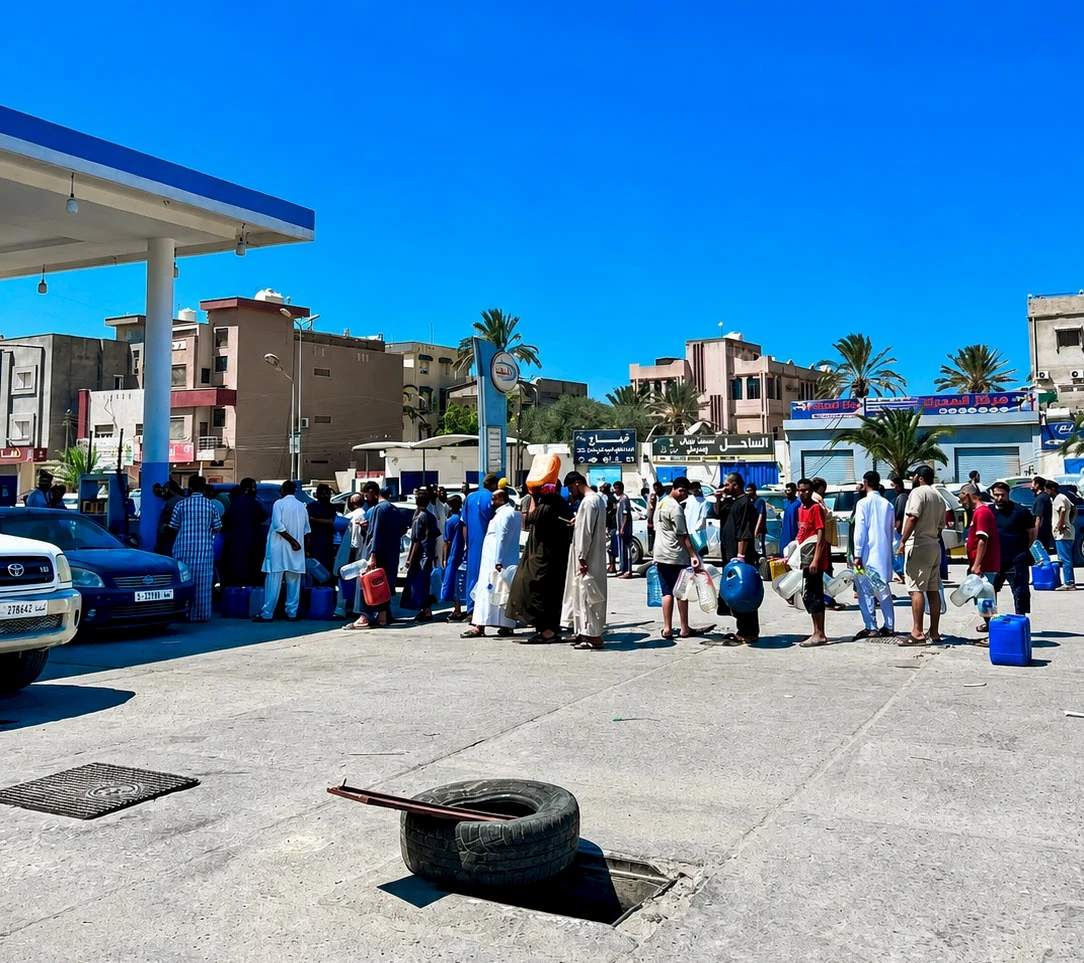
- Libya’s fuel crisis is becoming harder to explain as a simple shortage of supply.
Libya’s Fuel Crisis Deepens Despite Ample Supplies
Queues continue to form outside petrol stations and black-market prices are rising, even as large volumes of petrol and diesel enter the domestic market. The mismatch is putting renewed pressure on Libya’s fuel distribution system and raising questions about how much subsidised fuel reaches consumers.
Data from the National Oil Corporation (NOC) show that Libya received about 1.39m tonnes of fuel from domestic and external sources in July, including roughly 535,000 tonnes of petrol and 625,000 tonnes of diesel. Around 1.37m tonnes were distributed to the domestic market. The value of imported fuel was estimated at about $1.01bn.
Yet scarcity persists. Black-market diesel prices reached between 7 and 9 dinars a litre, while a 20-litre container of petrol sold for about $40.
Brega Petroleum Marketing Company has reported distributing large quantities of fuel to stations. But continued queues in several cities suggest that the problem lies somewhere beyond the volume of fuel entering the country.
That leaves distribution, monitoring and smuggling as the more difficult questions. Libya’s heavily subsidised fuel system has long created incentives for fuel to leak from official channels, while weak oversight can make it difficult to determine where shortages emerge between import terminals, storage facilities, distribution networks and petrol stations.
For a country that spends billions of dollars each year, securing fuel supplies, the persistence of shortages despite apparently ample volumes points to a deeper problem: Libya may not have a supply crisis so much as a failure to ensure that subsidised fuel reaches the people for whom it is intended.