The Manufactured Black Swan: How the Central Bank of Libya Failed to Protect the Dinar
With oil prices elevated, exports continuing and the country spared the direct disruption affecting major regional shipping routes, why has the dollar exceeded 9.7 Libyan dinars in the parallel market? The answer increasingly points not to bad luck, but to failures in foreign-exchange governance.

Libya presents an economic paradox that should be difficult to explain.
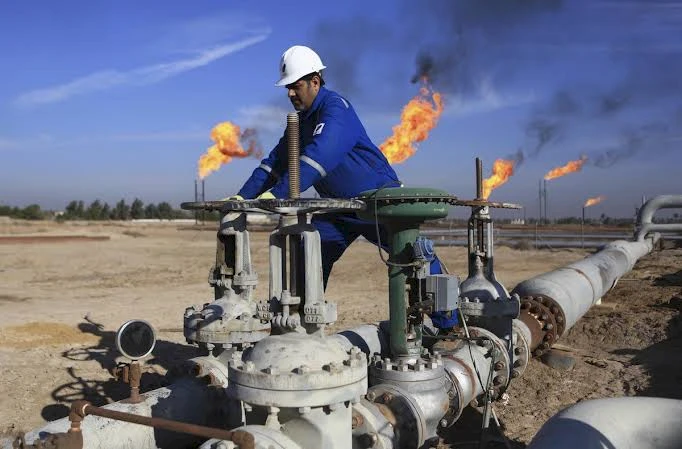
It is a relatively small country of roughly 7.5 million people. It is not currently fighting a nationwide war. Its population is largely homogeneous in religious and sectarian terms, sparing it some of the social fractures destabilising the other countries in the region. Most importantly, the commodity on which its economy depends, oil, has recently traded above $100 a barrel, while Libya has continued exporting despite the threats to shipping through the Strait of Hormuz and Bab al-Mandab.
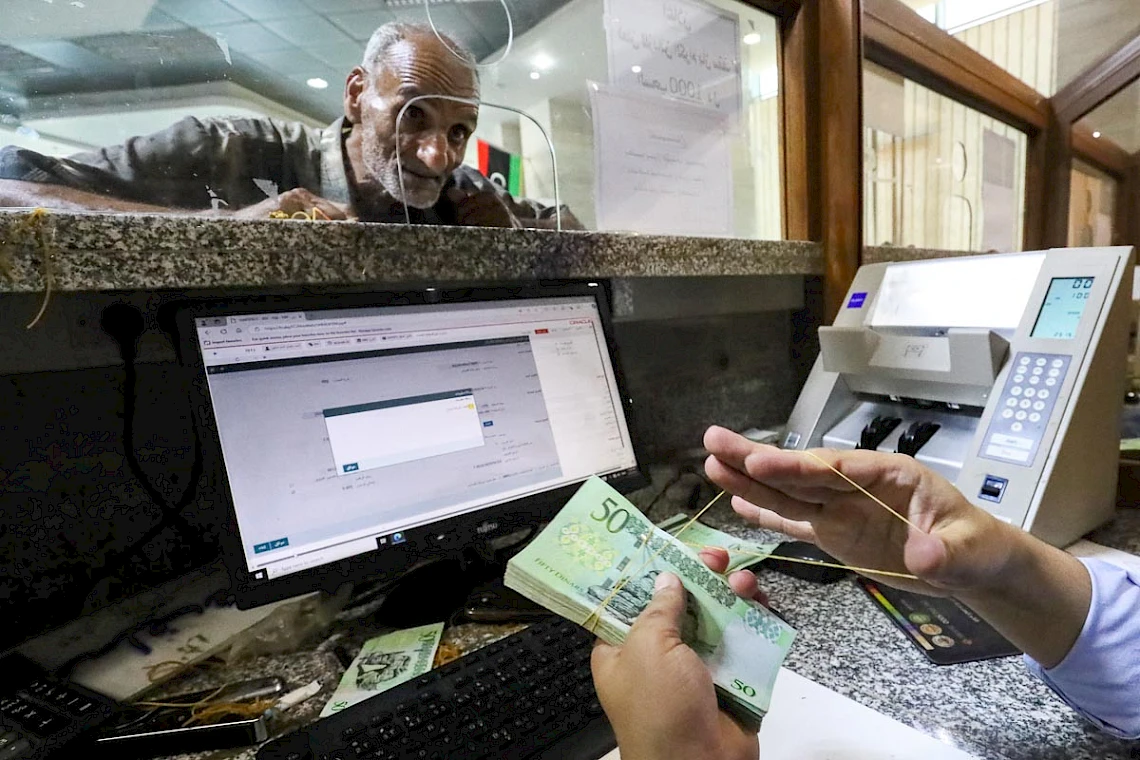
Yet the dollar has exceeded 9.7 dinars in the parallel market, compared with the Central Bank of Libya’s official rate of roughly 6.36 dinars—a premium of more than 52 percent. The gap is not a technical curiosity. It is a daily tax on households, a signal of collapsing confidence and an indictment of economic management.
How can an oil exporter earn more for its principal product and still watch its currency deteriorate? How can foreign-exchange scarcity deepen while the country is receiving an extraordinary external windfall?
These questions cannot be answered by oil prices alone.
A favorable external environment, a worsening domestic outcome
Libya unquestionably suffers from political division, weak fiscal discipline, institutional rivalry, oil-sector leakages and alleged corruption. These conditions cannot simply be ignored. But even if one temporarily treats them as constraints beyond the immediate control of the Central Bank, the Bank still receives substantial foreign-currency income and retains important monetary and regulatory tools.
Its responsibility is therefore not merely to distribute dollars. It must manage liquidity, expectations, access, supervision and the relationship between the official and parallel markets. The present outcome suggests that these instruments have not been combined into a credible policy.
The Bank’s own disclosures show the scale of foreign-exchange allocation. By the end of August 2026, commercial-bank uses of foreign currency had exceeded $20 billion. Earlier data showed that letters of credit accounted for more than half of commercial-bank foreign-exchange use. In July alone, the CBL announced another $1 billion for letters of credit, alongside $1 billion for personal foreign-exchange transactions.
Letters of credit are not inherently corrupt or economically harmful. Properly governed, they are a normal instrument for financing imports. In Libya, however, the system has become a potential black hole: billions of dollars leave through an opaque allocation mechanism, while citizens continue to face shortages, rising prices and a widening exchange-rate premium.
The crucial question is no longer how many letters of credit were opened. It is what entered Libya in return, at what price, for whose benefit and under what verification. Were the declared goods imported in the stated quantities? Were invoices inflated? Were shell companies or privileged networks able to obtain subsidised foreign currency and recycle part of it into the parallel market? Did the resulting imports genuinely increase domestic supply enough to restrain inflation?
Without transaction-level transparency, beneficial-ownership disclosure, post-import verification and publication of violations and sanctions, the public cannot know whether the system is financing trade or arbitrage.
The limits of a media campaign
When oil prices rose sharply following the regional war, the CBL tried to confront the parallel market by increasing access to physical U.S. dollars. In late April, it allocated an initial $1 billion to commercial banks, including a first shipment of $500 million, and announced that cash-dollar sales to individuals would begin in early May.
At the same time, official messaging and enforcement pressure appeared designed to frighten speculators and manage expectations. But expectations cannot be managed by announcements alone. They respond to whether market participants believe a policy is coherent, sustainable and backed by credible supply.
The strategy did not restore confidence. The parallel-market dollar subsequently rose rather than fell.
This does not mean that selling cash dollars was necessarily wrong. It means that dollar sales, used in isolation, were insufficient. If the market believes that subsidised foreign currency will continue leaking through poorly supervised channels, that public spending will continue expanding and that the official rate will eventually be devalued again, additional dollar injections can be absorbed without changing the underlying expectation.
The Bank could have paired greater foreign-exchange supply with a credible, publicly explained exchange-rate strategy. Under sufficiently strong reserves and fiscal coordination, even a clearly signalled intention to appreciate the official rate could have changed the incentives of parallel-market holders: speculators expecting a cheaper official dollar might stop accumulating currency or sell part of their holdings, increasing market supply.
But such a move is not costless and should not be treated as a slogan. An appreciation would be credible only if supported by sustainable foreign-exchange revenue, controlled public expenditure, tighter supervision and reliable access through official channels. Otherwise, the Bank would merely create another temporary price that the market does not believe.
The problem, therefore, is not the absence of one magical instrument. It is the absence of a coordinated policy package.
A self-reinforcing cycle
Libya now risks entering a destructive loop.
The CBL supplies more foreign currency through letters of credit and other official channels. Weak verification allows some of that currency—or the profits created by access to it—to feed demand and arbitrage in the parallel market. The dollar rises. Import prices increase. The dinar loses purchasing power. Public-sector employees, who form the majority of the formal workforce, demand higher salaries because existing incomes no longer cover basic costs. The state then increases dinar spending without an equivalent increase in domestic production, generating still more demand for imports and foreign currency.
This is how a foreign-exchange governance problem becomes an inflation problem, a wage problem and eventually a fiscal problem.
It is also why attributing the entire crisis to currency dealers is analytically convenient but inadequate. Speculation flourishes where policy lacks credibility. Closing exchange shops may alter where transactions occur, but it does not eliminate the reasons people seek dollars: inflation, uncertainty, import dependence, restricted official access and fear of another devaluation.
Allegations that require investigation, not retaliation
The governance concerns surrounding letters of credit have become more serious following claims by Libyan economic journalist Ahmed al-Sanussi. In a statement published on his Facebook account, al-Sanussi alleged that one individual made 177 million dinars through transactions connected to the letters-of-credit system in approximately one hour. He further alleged that, one day after his disclosure, the CBL took measures against three employees in the Banking and Monetary Supervision Department.
These claims have not been independently verified in this article and must not be treated as established facts. The CBL and those concerned should be given a full opportunity to respond. If the allegations are substantiated, however, the matter would extend beyond possible financial misconduct: any action linked to the disclosure of wrongdoing would raise grave concerns about whistleblower protection, freedom of expression and the Bank’s willingness to subject itself to scrutiny.
The appropriate institutional response is an independent investigation, not silence or premature conclusions. The Office of the Attorney General should examine the alleged transaction, the identity and beneficial ownership of the recipient, the approval chain, the underlying import documentation and the reasons for any measures subsequently taken against employees. The House of Representatives and relevant oversight bodies should demand the same evidence while avoiding political interference in the investigation.
The public also deserves a response from the CBL addressing the allegation directly. Institutional credibility is not preserved by suppressing uncomfortable questions. It is preserved by answering them with records.
Announcements versus economic results
The current administration has publicised several accomplishments, including international recognition, the design of a new 20-dinar banknote and agreements to deepen financial cooperation with China. The CBL and the People’s Bank of China did formally agree in July to facilitate the participation of Libyan banks in China’s Cross-Border Interbank Payment System, or CIPS. The CBL has since said that implementation has begun, with a pilot phase targeted for early 2027.
That distinction matters. An agreement is not the same as an operational result. CIPS may eventually reduce transaction costs and facilitate trade settlement with China, but it cannot by itself repair Libya’s fiscal indiscipline, stop fraudulent invoicing, supervise letters of credit or restore confidence in the dinar.
The same applies to awards and banknote aesthetics. Such achievements may have symbolic or administrative value, but citizens measure the value of money by what it buys. At a parallel-market rate above 9.7 dinars to the dollar, a 20-dinar note is worth only a little more than two U.S. dollars. A beautifully designed banknote is no substitute for a currency that retains its purchasing power.
Is consensus enough?
Naji Issa became governor in 2024 after a dangerous confrontation over control of the Central Bank. The compromise helped end a dispute that had contributed to the shutdown of oil production, and avoiding violence was unquestionably important. But the circumstances of an appointment cannot permanently substitute for performance.
The relevant question is not whether Issa was an acceptable consensus candidate during a crisis. It is whether his administration has demonstrated the independence, competence, transparency and policy coherence required to lead Libya’s most important economic institution today.
That question is especially urgent after Issa submitted his resignation in August, citing sensitive reasons, before political institutions urged continuity. Consensus can prevent institutional collapse, but it can also protect weak leadership from accountability. Libya must decide whether its institutions exist to preserve agreements among political stakeholders or to deliver measurable outcomes for the public.
A black swan that was not truly black
Nassim Nicholas Taleb used the term “black swan” to describe an extreme event that lies outside normal expectations and is rationalised only after it occurs. Libya’s currency crisis does not fully meet that definition.
The widening exchange-rate gap, opaque foreign-exchange allocations, expanding expenditure, import dependence and weak institutional oversight were visible in advance. The danger was foreseeable. Indeed, it was foreseen.
What Libya is experiencing is better described as a manufactured black swan: a crisis treated as an unforeseeable surprise even though policy choices helped create it.
A peaceful country of roughly 7.5 million people, earning exceptional prices for its dominant export and continuing to sell oil amid regional disruption, should be accumulating resilience. Its currency should not be collapsing toward ten dinars to the dollar. Its citizens should not be asked to celebrate cosmetic achievements while their salaries lose purchasing power.
The appearance of this “black swan” is not evidence that Libya was unlucky. It is evidence that an oil windfall was not converted into monetary stability, and that those responsible for managing the country’s foreign currency must now answer how and why.
Featured
All reports