
Libya's unified salary scale will not fix a foreign-exchange problem
With a 6.4-dinar official dollar, a 9.7-dinar parallel market and a $4.9bn foreign-exchange deficit despite high oil prices, the real question is where the foreign currency is going, not whose salary should be cut.
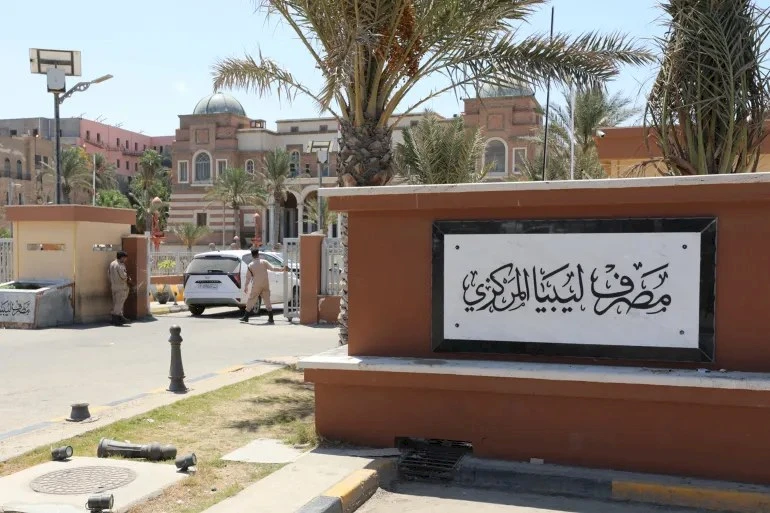

On 6 October 2026, Libya's Government of National Unity adopted a unified salary scale for public-sector employees, presenting it as an instrument of social justice and greater equality among state workers. Prime Minister Abdulhamid Dbeibah subsequently announced that implementation would begin with October salaries. The decision restructures the public pay system and cancels earlier special salary schedules and the financial advantages attached to them, while allowing proposals for allowances for jobs of a special nature.
On its surface, the objective is understandable. Libya has accumulated significant disparities between public-sector pay structures, and a government has a legitimate interest in creating a coherent compensation system. The problem begins when the scale is presented as part of the answer to Libya's wider economic and financial crisis. The evidence points to a deeper problem: the deterioration of the dinar's purchasing power, the foreign-exchange deficit, and the way foreign currency is allocated, particularly through the Central Bank of Libya's letters of credit (LCs).
Is Libya's economic crisis really rooted in public-sector salaries, or should greater attention go to the management of billions of dollars in foreign exchange?
The Libyan paradox
Libya is living through an extraordinary contradiction. It holds Africa's largest proven oil reserves and has a population of roughly 7.5 million. In 2026 it has also benefited from an exceptionally favourable oil-price environment: the war involving Iran and disruption to energy flows through the Strait of Hormuz pushed global prices sharply higher. For an oil exporter with so small a population, such conditions should provide a substantial foreign-exchange cushion.
The figures tell a different story. In the first eight months of 2026, Libya recorded about 98.9 billion dinars in public revenue against roughly 68.6 billion dinars in expenditure, a domestic fiscal surplus of around 30.3 billion dinars. But measured in the currency that matters for an import-dependent economy, the picture changes. Foreign-exchange uses reached about $20.1 billion, while oil revenues and royalties brought in about $15.2 billion, leaving a deficit of roughly $4.9 billion. The shortfall was reportedly covered by the Central Bank's investment income.
How does a country with exceptionally high oil prices and a domestic budget surplus produce a multibillion-dollar foreign-exchange deficit? That question should come before any discussion of which public employees should receive less, or which sectors should give up previously granted advantages.
The dinar has already cut Libyans' salaries
The salary debate also risks overlooking what has already happened to Libyan workers. Their pay may be denominated in dinars, but its real value depends heavily on the dinar's ability to buy foreign currency, because Libya imports a large share of what its population consumes.
By early October, the official selling rate for the dollar was around 6.4 dinars, while the dollar had recently traded near 9.7 dinars on the parallel market, a gap of more than 50 per cent. That is more than a statistic. Anyone able to obtain dollars at the official rate holds an asset worth substantially more in the parallel economy, so access to official foreign exchange becomes valuable in itself. This leads directly to one of the central questions of Libya's crisis.
Letters of credit: the question Libya cannot keep avoiding
LCs are not inherently problematic. In principle, they allow legitimate businesses to obtain foreign currency through the banking system at the official rate to finance imports. If those imports reach the Libyan market efficiently, greater supply should help stabilise prices and make essential goods more affordable.
The difficulty arises when the gap between the official and parallel rates becomes this large. A system that distributes dollars at around 6.4 dinars, while the same dollars fetch 9.5 to 9.7 dinars outside it, creates an obvious opportunity for rent-seeking, over-invoicing, fictitious imports and preferential access, unless controls are exceptionally strong.
Recent investigative reporting has sharpened these questions. Libyan investigative journalist Mohamed Algarj has published a series examining the LC system using public records and official data. Among the cases he highlights are large allocations to groups of companies and concentrated beneficiaries, which raise questions about ownership, the scale of the allocations, and whether the goods corresponding to those transfers entered Libya at the declared values and quantities.
Such reporting does not by itself establish criminal wrongdoing, and not every LC should be treated as suspicious. The instrument remains essential to legitimate trade. But the scale and concentration of some allocations, set against a persistent foreign-exchange deficit and a vast gap between exchange rates, make rigorous institutional scrutiny unavoidable.
The question is no longer whether Libya needs imports. It is whether every dollar leaving the country through the official foreign-exchange system corresponds to genuine economic value entering it.
Where is the oversight?
A further question may matter even more than the economic one: who is auditing this system?
The Central Bank itself lists banking supervision, internal controls, compliance, auditing and inspection among its core responsibilities. It has also announced efforts to strengthen governance and compliance and to review documentary-credit applications. Those commitments make the unanswered questions more pressing. Where are the results of these reviews? How many LC applications have been audited after execution? How systematically are imported quantities compared with customs records, market availability, company capacity and the value of foreign currency transferred abroad? How many companies receiving unusually large allocations have undergone enhanced due diligence? And where irregularities have been found, what sanctions or referrals have followed?
These are not accusations. They are questions any functioning system of monetary governance should be able to answer.
The same applies to Libya's other oversight institutions. If parliamentary scrutiny remains weakened by continuing political disputes, including those surrounding the leadership of the House of Representatives, responsibility for financial oversight does not simply disappear. The Attorney General's Office also has an important role wherever credible evidence raises questions about misuse of public resources, fraud, illicit enrichment or manipulation of the mechanisms through which Libya's foreign-exchange wealth is distributed. Given the sums involved and the growing body of public data, a transparent investigation of suspicious LC transactions would serve both the state and legitimate businesses, by separating genuine importers from those potentially exploiting the system.
Salaries matter, but they are not the whole story
None of this means the public wage bill should be ignored. It is large: Central Bank figures show about 46.9 billion dinars in salary spending in the first eight months of 2026 alone. A government has every right, and indeed an obligation, to examine payroll duplication, ghost employees, unjustified allowances and extreme disparities between comparable posts. A carefully designed unified framework could contribute to administrative fairness.
But reforming a payroll system is different from using salary compression, or the removal of sector-specific advantages, as a macroeconomic remedy. The first may be necessary. The second risks mistaking the symptom for the disease.
Teachers illustrate the point. Libya entered the current academic year amid protests and strikes over pay and working conditions, with rising living costs and currency depreciation continuing to erode real incomes. Medical staff and other public-sector workers face similar pressures, their nominal salaries not having kept pace with the loss of purchasing power. If ten workers are growing poorer, cutting the income of the eleventh does not make the first ten richer.
The better question
Instead of asking how to reduce disparities between government salaries, policymakers should first ask why the purchasing power of Libyan salaries is deteriorating in an oil-rich country during one of the strongest oil-price environments in recent years.
That question leads inevitably to monetary policy, the exchange rate, foreign-exchange allocation, public spending, import financing, corruption controls and institutional oversight. A serious economic strategy would pair payroll reform with far deeper reform of the foreign-exchange system:
- transparent publication of LC beneficiaries and amounts;
- verification that imports actually enter Libya at the declared quantities and values;
- stronger post-transaction auditing;
- scrutiny of unusually concentrated allocations;
- cooperation among the Central Bank, customs, tax authorities, the Ministry of Economy and the Attorney General;
- public reporting on investigations and enforcement.
Above all, Libya must address the gap between the official and parallel rates. As long as access to an official dollar creates a substantial economic rent, the incentive to capture that access will remain extraordinarily powerful.
Do not redistribute the loss
The unified salary scale may address real inequalities within Libya's fragmented public-sector pay system, and that objective deserves serious consideration. But it should not be presented as a cure for the broader crisis.
The central paradox remains unresolved. Libya has benefited from exceptionally high oil prices, recorded a large domestic fiscal surplus and has a population of only around 7.5 million, yet it still ran a foreign-exchange deficit of about $4.9 billion in the first eight months of 2026. Before asking teachers, doctors, university professors or other public employees to give up purchasing power or previously granted advantages in the name of economic balance or social justice, the state must explain where the foreign currency is going, and why extraordinary oil income has failed to strengthen the dinar. And before calling salary restructuring social justice, policymakers should distinguish between redistributing income and redistributing economic loss.
If billions of dollars continue to leave the country through a foreign-exchange system whose controls, allocations and beneficiaries raise serious unanswered questions, levelling salaries downwards will not repair the structural problem. It may simply spread its consequences more evenly. Libya does not need a mechanism for making its citizens equally poorer. It needs institutions capable of protecting the value of its currency, accounting for every dollar of its oil wealth, and ensuring that access to public foreign exchange serves the real economy rather than those best placed to capture the gap between two exchange rates.
Until then, the unified salary scale risks becoming not the solution to Libya's economic troubles but, as the Libyan expression goes, more water poured onto the mud.
Featured
All reports


